Common Electrical Problems in Older Homes in Mt. Vernon, TX
Electrical problems in older homes are more common than many homeowners realize. In Mt. Vernon, TX, older houses often have charm, character, and strong construction, but the electrical systems inside them may no longer match the demands of modern living. Years ago, homes were built for basic lighting, a few appliances, and limited daily power use. Today, families depend on larger HVAC systems, kitchen equipment, entertainment centers, home office devices, phone chargers, security systems, and many more electrical conveniences that older systems were never designed to support.
This gap between old infrastructure and modern demand is where many electrical issues begin. At first, the signs may seem minor. You might notice lights flickering once in a while, breakers tripping in certain rooms, outlets that feel warm, or not enough places to plug things in safely. Over time, these small frustrations can point to larger concerns involving wiring age, overloaded circuits, outdated panels, worn outlets, or hidden safety risks behind the walls.
Understanding these problems matters because electrical issues are not just about convenience. They affect safety, reliability, home value, and your family’s day-to-day comfort. If you own an older property in Mt. Vernon or anywhere around East Texas, learning what to watch for can help you make informed decisions before a repair becomes more complicated and expensive.
Bohlken Electric provides dependable residential electric services for homeowners who need troubleshooting, repairs, electrical upgrades, and local professional support. When older homes begin showing signs of wear in the electrical system, early attention can make a major difference.
Table of Contents
- Why Older Homes Often Have Electrical Issues
- Top Electrical Problems in Older Homes Homeowners Should Know
- 1. Outdated Electrical Panels
- 2. Insufficient Circuits for Modern Power Use
- 3. Flickering or Dimming Lights
- 4. Worn or Unsafe Outlets and Switches
- 5. Old or Damaged Wiring Behind the Walls
- 6. Breakers That Trip Repeatedly
- 7. Too Much Dependence on Extension Cords and Power Strips
- 8. Poor Grounding and Limited Protection
- 9. Limited Capacity for New Appliances, Remodels, or Generators
- Why Local Service Matters for Older Homes in Mt. Vernon
- Frequently Asked Questions
- Conclusion
Why Older Homes Often Have Electrical Issues
Older homes were built in a different electrical era. At the time, the original system may have been fully appropriate for the household’s needs. Families used fewer appliances, fewer electronics, and fewer high-demand devices overall. The power expectations of a typical home were much lower than they are today.
Over the years, however, the way people live has changed. Kitchens now include microwaves, coffee makers, air fryers, multiple countertop appliances, and larger refrigerators. Home offices include computers, monitors, printers, routers, and charging stations. Bedrooms often have televisions, sound systems, and multiple devices being charged at once. Garages may support tools, freezers, lighting, and workshop equipment. All of that places ongoing demand on a system that may have been designed decades ago for a much simpler lifestyle.
That is why electrical problems in older homes tend to show up as a combination of capacity issues, aging materials, outdated safety standards, and wear from years of use. In some homes, previous additions or repairs may also have been done in different stages by different people, leading to patchwork results that no longer work together efficiently.
What makes this especially important is that many electrical issues stay hidden until symptoms start showing. Because wires run behind walls and most system components are out of sight, homeowners often do not realize a problem exists until lights flicker, breakers trip, outlets fail, or smells and heat begin to appear. Recognizing the most common warning signs helps you act sooner and protect the home more effectively.
Top Electrical Problems in Older Homes Homeowners Should Know
Electrical problems in older homes can affect safety, comfort, and the ability to use modern appliances without frustration. Some issues are obvious, while others are subtle until they become more serious. The most common problems tend to involve the panel, wiring, outlets, circuit distribution, and the overall ability of the home to keep up with current electrical demand.
For homeowners in Mt. Vernon, these concerns matter even more when a house is being remodeled, expanded, updated with new appliances, or prepared for backup power improvements. Instead of waiting for a failure, it is smarter to understand what these problems look like and deal with them early.
1. Outdated Electrical Panels
One of the most common electrical problems in older homes is an outdated panel that no longer matches the needs of the property. The electrical panel is the heart of the home’s power system. It receives incoming electricity and distributes it to the different circuits throughout the house. When the panel is old, undersized, worn, or crowded, the rest of the system usually feels the effects.
Homeowners may first notice this through frequent breaker trips, uneven power distribution, limited room for additional circuits, or difficulty supporting larger appliances. In some cases, the panel may still function, but only at the edge of what it can safely handle. That makes everyday use less dependable and can create more stress throughout the system.
An outdated panel also becomes a bigger issue when homeowners want to improve the property. Kitchen upgrades, HVAC changes, additional outlets, garage improvements, or standby power projects all rely on a panel that can support those needs. If the panel cannot do that confidently, an upgrade may be the right long-term solution.
2. Insufficient Circuits for Modern Power Use
Another major example of electrical problems in older homes is simply not having enough circuits for the way the house is used today. Older homes were often built with fewer dedicated circuits, fewer outlets, and less electrical planning for specialty appliances. As families add more devices over time, those limited circuits get stretched too far.
This can show up in many ways. Kitchens may feel overloaded during busy mornings. Home office equipment may strain bedroom circuits that were never meant for computer-heavy use. Garage tools may cause interruptions. Laundry areas may feel underpowered when several items run at once. Sometimes the signs are subtle, like flickering lights or occasional breaker trips. Other times, the limitations become more obvious and more frustrating.
Insufficient circuits are not just about inconvenience. They often push homeowners toward temporary solutions that are less safe, such as overusing power strips or extension cords. A better approach is to have the system evaluated and updated to better match how the home is actually lived in now.
3. Flickering or Dimming Lights
Lighting issues are among the most noticeable electrical problems in older homes. Flickering or dimming lights may seem minor at first, but they often provide an early clue that the system is under stress. In some situations, the cause is simple, such as a loose bulb or a worn switch. In many other situations, flickering points to overloaded circuits, unstable wiring connections, or a panel that is struggling to maintain steady power.
Older homes are especially prone to this issue because their systems have had decades of use and may have gone through multiple repairs or additions over time. If lights dim when the air conditioner turns on, flicker when kitchen appliances run, or pulse in more than one room, the problem deserves attention.
Lighting should be stable under normal conditions. When it is not, that is a sign the electrical system may no longer be performing the way it should. If flickering is already affecting your home, you may also want to compare it with broader symptoms such as breaker trips, warm outlets, or limited panel capacity.
4. Worn or Unsafe Outlets and Switches
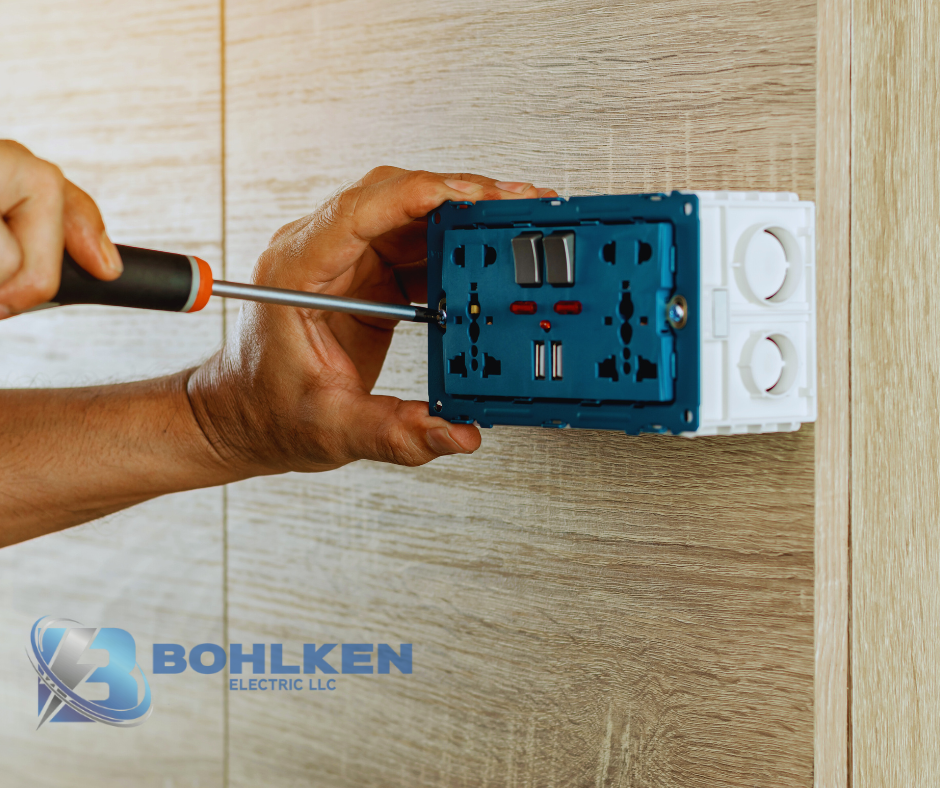
Older outlets and switches go through years of repeated use. Over time, that wear can lead to loose connections, unstable performance, discoloration, warmth, buzzing, or physical damage. This makes worn receptacles and controls one of the most practical electrical problems in older homes to watch for.
You may notice that plugs slip out too easily, switches feel loose, or certain outlets stop working consistently. In some rooms, outlets may be sparse or poorly placed, causing heavier dependence on extension cords. In others, the outlet itself may feel warm, which can indicate a failing internal connection or stress on the circuit.
These issues are important because the outlet or switch is often the part of the system homeowners interact with most. If those visible components are showing wear, it can be a clue that the wiring and connections behind them should also be evaluated. Replacing a worn device is sometimes enough, but not always. In older homes, the condition of the surrounding system matters just as much as the faceplate you can see.
5. Old or Damaged Wiring Behind the Walls
One of the more serious electrical problems in older homes involves the wiring itself. Because wiring is hidden, homeowners may not think about it often. But years of wear, heat, moisture, movement, renovations, and past repair work can all affect its condition. Insulation can deteriorate, connections can loosen, and older materials may no longer offer the level of safety and performance a modern home needs.
The signs of wiring trouble are often indirect. Lights may flicker. Outlets may fail. Breakers may trip. Switches may buzz. Certain rooms may seem unreliable or inconsistent. Sometimes homeowners notice a burnt smell, which should always be taken seriously. In many cases, the wiring issue remains hidden until a professional inspection reveals exactly where the weakness is.
Older homes that have been remodeled in stages may be especially vulnerable because new electrical additions may have been tied into existing systems at different times, with varying quality of workmanship. That makes wiring condition one of the biggest long-term concerns to understand and address properly.
6. Breakers That Trip Repeatedly
Repeated breaker trips are another common example of electrical problems in older homes. Breakers exist to protect the system. They shut power off when a circuit is overloaded or unsafe. But when the same breaker trips over and over, it usually means the problem is not random. It means that circuit is telling you something is wrong.
In older homes, repeated trips often come from too much demand being placed on old circuits, weak breaker performance, poor electrical distribution, or an undersized panel. Homeowners sometimes get into the habit of resetting the breaker and moving on, but that only treats the symptom, not the cause. The deeper issue remains in place and may continue to worsen over time.
If repeated trips are happening in the kitchen, bathroom, garage, laundry area, or home office, it often points to modern electrical needs being placed on older infrastructure. That mismatch is one of the clearest reasons homeowners eventually choose targeted upgrades or broader system improvements.
7. Too Much Dependence on Extension Cords and Power Strips
It may not look like a major electrical issue at first, but constant reliance on extension cords and power strips is one of the most overlooked electrical problems in older homes. It usually means the house does not have enough outlets, enough convenient access to power, or enough circuit planning to support daily use comfortably.
Older homes often have fewer outlets per room than modern homeowners need. A living room may have been designed before televisions, streaming devices, gaming systems, speakers, routers, and chargers became common. A bedroom may now serve as a remote office. A garage may function as storage, workshop, and laundry space all at once. When the electrical system has not been updated to reflect those changes, cords begin to take over.
While extension cords and strips have a place for temporary use, they should not become permanent electrical infrastructure. When they do, the better solution is usually to improve the home’s actual wiring and outlet layout rather than continue layering temporary fixes on top of an outdated system.
8. Poor Grounding and Limited Protection
Another important category of electrical problems in older homes involves grounding and modern protective devices. Older systems may not provide the same level of protection expected in modern homes, especially in areas where moisture, kitchen equipment, bathroom outlets, garage usage, or exterior exposure create higher risk.
Grounding helps direct fault current safely and supports safer overall electrical operation. Modern protective standards also place more focus on areas where homeowners use water, outdoor equipment, tools, and sensitive electronics. If an older home has limited updates in these areas, the system may be functioning without the level of protection that a modern household benefits from.
Homeowners do not always notice this issue right away because grounding and protection are not as visible as a flickering light or dead outlet. But these factors matter a great deal for safety and long-term reliability. When an electrician evaluates an older system, grounding and code-related protection often become an important part of the conversation.
9. Limited Capacity for New Appliances, Remodels, or Generators
One of the most practical electrical problems in older homes is the inability to grow with the property. A home may work reasonably well for basic daily use, but the moment the owner wants to remodel the kitchen, add a workshop, install larger HVAC equipment, or prepare for backup power, the system shows its limitations.
This is where many homeowners discover that older electrical infrastructure was barely keeping up in the first place. Adding new appliances or circuits may reveal that the panel is full, the wiring needs attention, or the home needs better distribution overall. Planning for standby backup power can also bring these issues into focus because generator systems must integrate safely with the existing electrical setup. If backup power is part of your plans, Bohlken Electric also provides generator installation support for properties that need dependable electrical preparation.
Homes should be able to adapt to modern needs without constant strain. When they cannot, it is often a sign that the system has reached the point where upgrades are no longer optional for long-term reliability.
Why Local Service Matters for Older Homes in Mt. Vernon
Older homes are rarely identical. Even if two houses were built around the same time, they may have very different electrical histories. One may have had several remodels, another may still have original components in key areas, and another may have been repaired in stages over many years. That is why diagnosing electrical problems in older homes requires more than generic advice. It requires a real evaluation of the home’s condition, layout, usage patterns, and long-term needs.
For homeowners in Mt. Vernon, local experience matters because a qualified electrician can look at the home as a whole and recommend practical solutions based on how the property is actually being used. Bohlken Electric serves homeowners with residential electrical troubleshooting, repairs, upgrades, and dependable local service backed by years of experience. If you want to learn more about the company, you can visit the official website, connect on Facebook, view the business on Google Maps, read reviews on Yelp, watch updates on YouTube, and see additional company information on Google Sites.
For property owners who also need power solutions beyond the home, Bohlken Electric provides commercial electric services as well. That can be helpful for local owners balancing both residential and business electrical needs in the Mt. Vernon area.
Frequently Asked Questions
Why do older homes have more electrical issues?
Older homes were built for lower electrical demand than modern households require today. That is why electrical problems in older homes often involve overloaded circuits, outdated panels, worn wiring, limited outlets, and aging components.
Are flickering lights common in older homes?
Yes, they can be. Flickering lights may come from loose bulbs, worn fixtures, overloaded circuits, unstable wiring connections, or an older panel that is under stress. Repeated flickering should be inspected.
Is it normal for breakers to trip in an older house?
Occasional trips can happen, but repeated breaker trips are not normal. They often indicate overloaded circuits, weak breakers, poor distribution, or broader system limitations that need professional attention.
Should I be worried about warm outlets in an older home?
Yes. Outlets should not feel warm. Heat can indicate a poor connection, worn device, overloaded circuit, or deeper wiring issue behind the wall.
Can an older home support new appliances and modern electronics?
Some can, but many older homes need electrical updates to support modern power demands safely and reliably. The system should be evaluated before adding larger appliances or major new equipment.
When should I call an electrician for an older home?
You should call when you notice recurring signs such as flickering lights, breaker trips, dead outlets, buzzing switches, warm receptacles, limited power, or any indication that the home is struggling to handle normal use.
Conclusion
Electrical problems in older homes should never be dismissed as just part of living in an older property. While these homes often have strong character and lasting value, their electrical systems may be dealing with years of wear, outdated design, limited capacity, and safety concerns that are no longer visible on the surface. Problems such as aging panels, insufficient circuits, flickering lights, worn outlets, poor grounding, and hidden wiring issues can all affect the comfort and safety of your home.
For homeowners in Mt. Vernon, the smartest approach is to pay attention to early warning signs and address them before they grow into more serious and costly repairs. Whether you are dealing with daily electrical frustrations or planning future upgrades, professional guidance can help you understand what your home needs now and what will support it better moving forward. With the right electrical repairs and updates, an older home can continue serving your family safely and reliably for years to come.
Comments
Post a Comment